
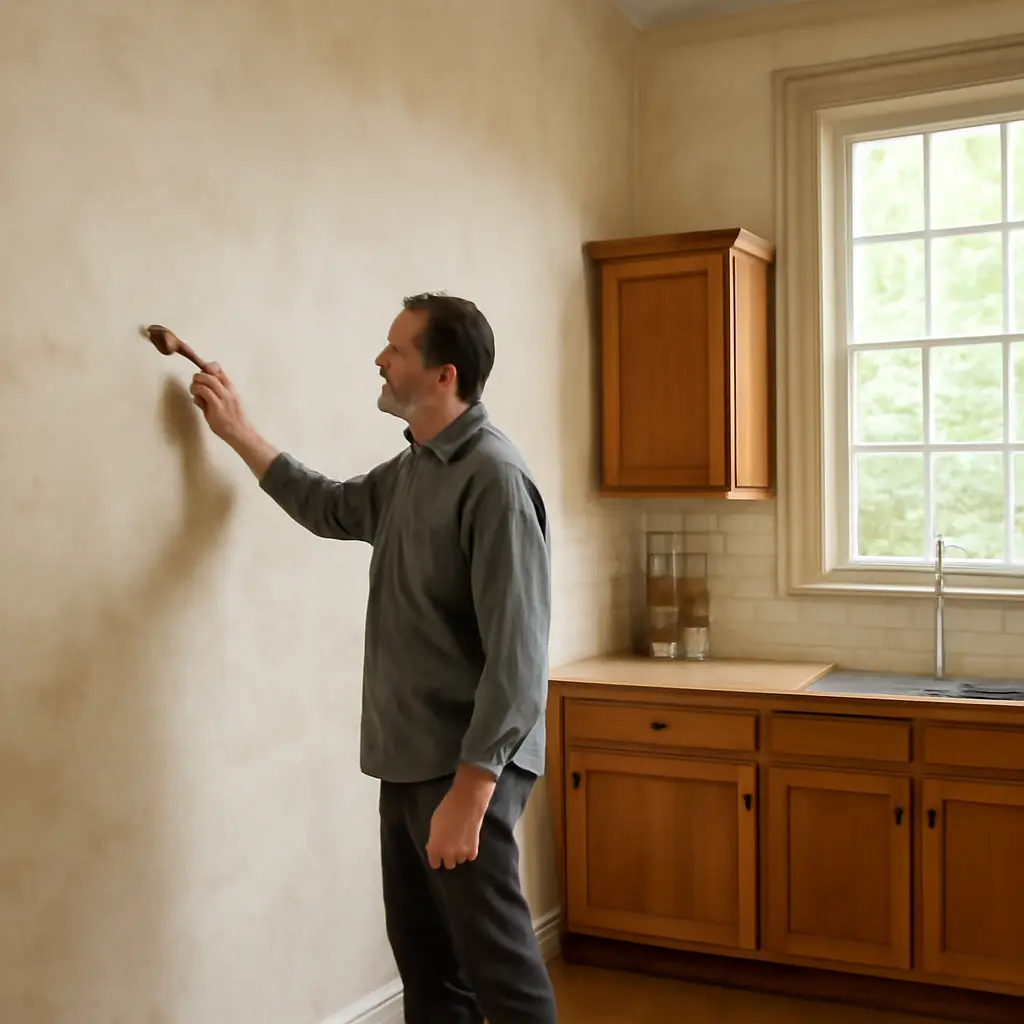
Antique wall treatments that stand up to moisture are finishes and coverings—such as limewash, mineral paint, ceramic tile, and certain historic plasters—that can tolerate damp conditions when matched to the wall and maintained appropriately. The key is not choosing a material labeled “waterproof,” but managing water at its source and using a finish that lets the wall dry. Historic England notes that traditional solid walls often rely on moisture movement and evaporation; impermeable coatings can trap water and contribute to deterioration. Below, we compare durable historic options, explain where each works best, and outline practical checks before installation.
Moisture-resistant antique wall treatments: what durability means
“Moisture-resistant” describes a wall treatment’s ability to tolerate humidity, splashes, or limited wetting without unacceptable damage. It does not mean that the wall can safely withstand leaks, rising damp, or continuous water exposure. The U.S. Environmental Protection Agency (EPA) advises keeping indoor humidity below 60 percent, ideally between 30 and 50 percent, to help limit mold growth. That guidance matters because a finish cannot compensate for persistent moisture behind it.
In older buildings, durability depends on the whole wall assembly: substrate, mortar or plaster, paint or covering, ventilation, and the route by which water enters and leaves. Historic England cautions that hard, impermeable materials can hinder drying in traditional solid walls. A treatment that performs well in a ventilated kitchen may fail in a cellar with active water ingress.
Vapor permeability and drying
Vapor permeability is the capacity of a material to allow water vapor to pass through it. Lime-based finishes are valued in historic construction because they are generally more vapor-open than many modern film-forming paints. This can support drying, but it does not make limewash or lime plaster waterproof. In a persistently wet location, moisture can still soften finishes, carry salts to the surface, or damage underlying masonry.
Water exposure, mold, and maintenance
The type and duration of exposure are as important as the material. Occasional condensation, routine splashing, and direct shower spray are different conditions. The EPA’s humidity guidance is a useful indoor benchmark, but visible leaks or recurring damp patches require investigation rather than a new decorative layer. Mold can grow on many surfaces when moisture remains, so cleaning and repainting without correcting the source is not a durable repair.
With those limits in mind, traditional breathable finishes are often appropriate for damp-prone rooms that are not directly exposed to standing water. For surfaces that receive regular splashes, a fired, nonporous material is usually more reliable.
Traditional breathable finishes for damp-prone walls
Breathable finishes are wall treatments that allow moisture vapor to move through the finish rather than sealing the surface with a continuous impermeable film. The term is commonly used for limewash, lime plaster, and some mineral coatings. Their suitability depends on the wall’s construction and condition; a breathable finish is not a substitute for fixing failed gutters, plumbing leaks, or ground moisture.
Limewash
Limewash is a thin, mineral finish made principally from lime and water, sometimes with natural pigments. It creates a soft, matte surface and is traditionally applied in multiple thin coats to compatible masonry or lime plaster. Its open texture can accommodate moisture movement better than many modern plastic-based paints, and small areas can often be renewed without stripping the entire wall.
Limewash is not scrub-proof or waterproof. It can mark, wear away, and require periodic recoating, particularly in busy areas. It is best suited to walls with condensation risk or modest damp exposure—not shower enclosures, sink splash zones, or walls with active water penetration. Before application, confirm that the existing surface is compatible; limewash may not adhere well to a sealed or glossy coating.
Lime plaster
Lime plaster is a mineral plaster made with lime binder and aggregate. In historic buildings it can be more compatible with traditional masonry than hard cement-based repairs, while allowing the wall to dry through evaporation. It may be appropriate for older kitchens, utility rooms, and some cellar walls after the source of excess water has been addressed.
Lime plaster should not be treated as a waterproof lining. Persistent wetting can cause surface erosion, salt deposits, or loss of adhesion. The National Park Service’s preservation guidance emphasizes choosing repair materials compatible with historic construction; in practice, that means assessing the original wall and matching the repair rather than applying a harder material by default.
Mineral and silicate paints
Mineral paints, including silicate paints, use inorganic binders that can bond with suitable mineral substrates. They are often selected for masonry where a durable, vapor-permeable coating is desired. Product performance varies, and many formulations require a clean, absorbent mineral surface; they may not be suitable over old oil paint, wallpaper, or sealed plaster.
Check the manufacturer’s technical data for substrate restrictions, water resistance, and vapor transmission rather than relying on the word “breathable” alone. In a historic interior, test a small area first and consult a conservation professional if the wall contains original paint, decorative plaster, or fragile masonry.
Where the wall must endure regular direct splashing, breathable coatings have practical limits. Hard-fired tile and carefully detailed grout provide a different kind of protection.
Historic hard-surface treatments for splash zones
Hard-surface wall treatments resist liquid water at the face of the wall. Glazed ceramic tile is a long-established example: its fired surface is relatively nonabsorbent, making it useful behind sinks and in other splash-prone areas. The protection depends on the full assembly, including joints, edges, substrate, and any required waterproofing. Tile alone does not make a wall watertight.
Glazed ceramic tile
Glazed ceramic tile has a glass-like surface fused during firing, which helps resist staining and routine splashes. It is a strong choice for a backsplash or a historically styled bathroom wall when installed on a sound, appropriate backing. Antique tiles can add period character, but their condition, flatness, and compatibility with modern installation materials should be assessed before reuse.
The weak points are usually the joints and transitions, not the tile face. Grout can absorb water, crack, or deteriorate; corners and plumbing penetrations also need sound detailing. Regrouting or sealing may be appropriate for some systems, but sealers do not replace repairs to failed joints or a suitable water-management layer.
Stone, terrazzo, and historic paneling
Natural stone and terrazzo can provide durable, period-appropriate surfaces, but their moisture behavior varies by stone type, finish, and sealer. Porous stone may absorb liquids and develop staining or salt damage. Historic wood paneling, by contrast, is generally unsuitable for repeated wetting unless designed and maintained for that exposure; water can swell boards, loosen joints, and damage coatings.
For these materials, specify the exact location and expected exposure before choosing a treatment. A stone wainscot in a dry powder room is a different case from a shower wall. Preserve original materials where feasible, but do not assume that age or traditional appearance makes a finish suitable for continuous wetting.
Grout, joints, and transitions
Grout is the joint material between tiles; flexible sealant is commonly used at changes of plane and around fixtures. These details manage movement and help limit water entry. Inspect them periodically for cracking, gaps, or discoloration. If water is reaching the backing, surface cleaning or applying a topical sealer will not resolve the underlying failure.
Choosing between breathable finishes and hard surfaces is only one part of the decision. The wall’s age, construction, and source of moisture determine whether either option will last.
How to choose and maintain an antique wall treatment
A successful specification starts with diagnosis. The National Park Service and Historic England both emphasize preservation approaches that account for original materials and building behavior. Before covering an old wall, identify whether moisture comes from condensation, a plumbing leak, roof or gutter failure, ground water, or water splashing from daily use.
Match the treatment to the exposure
- For a dry living room or bedroom with occasional humidity, compatible limewash or mineral paint can preserve a traditional appearance while allowing drying.
- For an older kitchen wall outside the direct splash zone, lime plaster or a compatible mineral finish may be suitable once leaks and ventilation problems are corrected.
- For a backsplash or regularly splashed surface, glazed tile is typically more practical, with sound joints and appropriate backing.
- For a shower or other continuously wet area, use a complete modern waterproofing system designed for that application; do not rely on limewash, plaster, or decorative tile alone.
- For a cellar or wall with recurring dampness, diagnose and manage the moisture source before applying a finish.
Inspect before covering
Look for active leaks, peeling coatings, salt deposits, soft plaster, musty odors, and staining that returns after cleaning. Check exterior drainage, roof coverings, gutters, plumbing, and room ventilation as relevant. If dampness is extensive, recurring, or associated with structural movement, seek a qualified building or conservation professional. Applying a new finish over a wet or salt-contaminated surface can conceal symptoms without fixing the cause.
Maintain the finish without trapping moisture
Keep rooms ventilated, repair leaks promptly, and clean surfaces using methods suited to the material. Avoid adding a non-breathable coating over traditional lime finishes unless a specialist has confirmed that it is appropriate. For tiled areas, maintain grout and flexible joints and investigate any signs of water behind the surface. A simple inspection after seasonal changes can catch small failures before they become costly repairs.
A useful visual comparison would chart each treatment by direct-water tolerance, vapor openness, and maintenance needs: limewash and lime plaster generally favor drying but tolerate limited direct wetting; glazed tile resists face-level splashes but relies on sound joints and backing. This makes clear why no single “antique” finish is right for every damp room.
Conclusion: durable historic walls depend on moisture control
Antique wall treatments can hold up in moisture when their strengths match the exposure. Limewash, lime plaster, and suitable mineral paints offer traditional, vapor-open finishes for compatible walls with manageable damp conditions. Glazed ceramic tile is better suited to routine splash zones, provided its grout, transitions, and backing are properly maintained. None of these finishes fixes a leak or makes a wall immune to persistent water.
Start by identifying the moisture source, then select a compatible treatment and maintain the details that protect it. For further guidance, consult preservation resources from Historic England and the National Park Service, and seek professional advice when a historic wall is actively damp or deteriorating.
Sources: U.S. Environmental Protection Agency, A Brief Guide to Mold, Moisture and Your Home, https://www.epa.gov/mold/brief-guide-mold-moisture-and-your-home; Historic England, Damp in Historic Buildings, https://historicengland.org.uk/advice/technical-advice/building-maintenance-and-repair/damp-in-historic-buildings/; National Park Service, Preservation Brief 2: Repointing Mortar Joints in Historic Masonry Buildings, https://www.nps.gov/orgs/1739/upload/preservation-brief-02-repointing.pdf; National Park Service, Preservation Brief 21: Repairing Historic Flat Plaster—Walls and Ceilings, https://www.nps.gov/orgs/1739/upload/preservation-brief-21-flat-plaster.pdf.


