An antique-shop haggle is a respectful conversation about whether a dealer can adjust an item’s price—not a demand for a bargain. The best approach is to research the object, ask politely, make a reasoned offer, and accept the answer graciously. This matters in a market where value depends on factors such as age, condition, rarity, authenticity, and provenance, and where a shop’s marked price may already reflect the dealer’s costs and expertise. Below, you’ll learn how to judge an asking price, choose an offer, negotiate without causing offense, and recognize when it is better to pay the price or walk away.
Respectful negotiation shapes antique-shop haggling
Haggling is a form of voluntary price negotiation: a buyer proposes a different price, and the seller may accept, decline, or suggest a compromise. There is no universal rule that every antique-shop price is negotiable. Dealers set prices in light of their knowledge, acquisition costs, restoration, overhead, and expectations about demand. The respectful goal is to invite a conversation, not to imply that the dealer has priced the object foolishly or is obliged to discount it.
The U.S. Federal Trade Commission advises consumers to understand a product and compare prices before buying; that general advice applies to antiques too, though comparable objects can be difficult to find. A piece’s appearance alone cannot establish its age or authenticity. The American Alliance of Museums’ guidance on collection care also underscores that materials and condition affect how objects should be handled. Together, these points make preparation and careful conversation more useful than relying on a generic rule such as “always offer half.”
Price research establishes a reasonable starting point
Price research means comparing the specific item—or genuinely similar examples—against credible market evidence before making an offer. Look for completed sale prices where available, rather than treating unsold asking prices as proof of value. Compare maker, age, materials, size, condition, rarity, and provenance; a similar-looking item may differ substantially on any of these points. Auction results can provide useful context, but the amount realized may not equal a shop’s retail price because venue, fees, guarantees, and buyer expectations differ.
For example, a buyer considering a mid-century chair might compare examples by the same designer and model, then account for upholstery, repairs, and whether the chair has supporting documentation. If reliable comparisons are scarce, treat that uncertainty as a reason to ask questions—not as evidence that the dealer’s price is wrong. The Federal Trade Commission’s consumer guidance supports comparison shopping as a way to make informed purchases, while the precise valuation of an antique remains item-specific.
Condition and provenance affect the offer
Condition describes an object’s present state, including wear, damage, restoration, and missing parts. Provenance is the documented history of an object’s ownership or origin. Both can influence desirability and price, but neither should be guessed from a quick glance. Ask whether a repair is known, whether parts are original, and what documentation supports a claimed maker or history. If the dealer does not know, that is not automatically a fault; it is useful information for deciding what the item is worth to you.
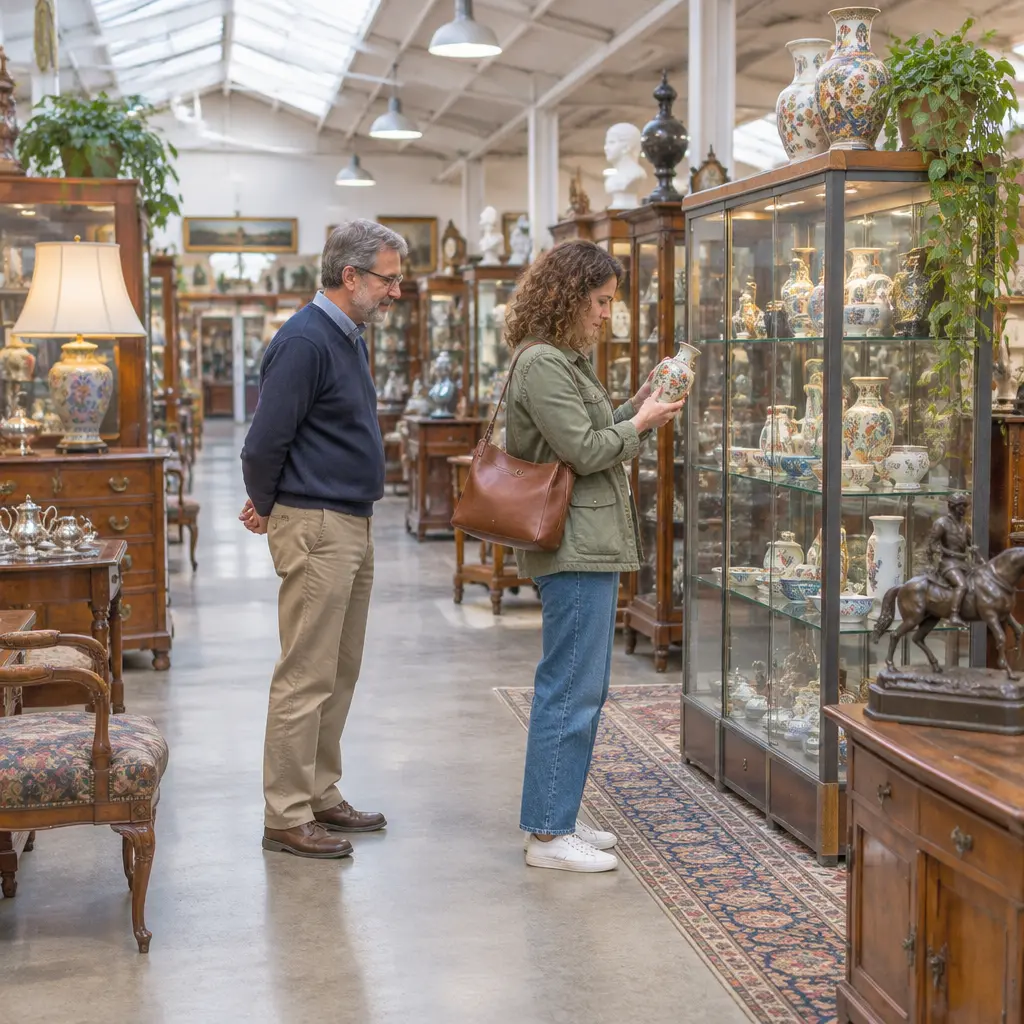
Handle objects only as the dealer permits. The Smithsonian’s preservation guidance emphasizes that handling can expose collections to risks such as physical damage and contaminants. In a shop, that principle translates into asking before lifting, opening, or testing a fragile piece. A careful inspection protects the item and signals that you are taking the purchase seriously.
Polite offers make antique-shop haggling constructive
A polite offer is specific, calm, and framed as a question. Its strength comes from a clear reason—such as a documented comparable sale, a repair needed, or a budget limit—not from a dismissive judgment about the dealer’s price. There is no authoritative percentage that works for every shop or object. The appropriate offer depends on the item, the evidence, the dealer’s stated flexibility, and your willingness to buy at the agreed price.
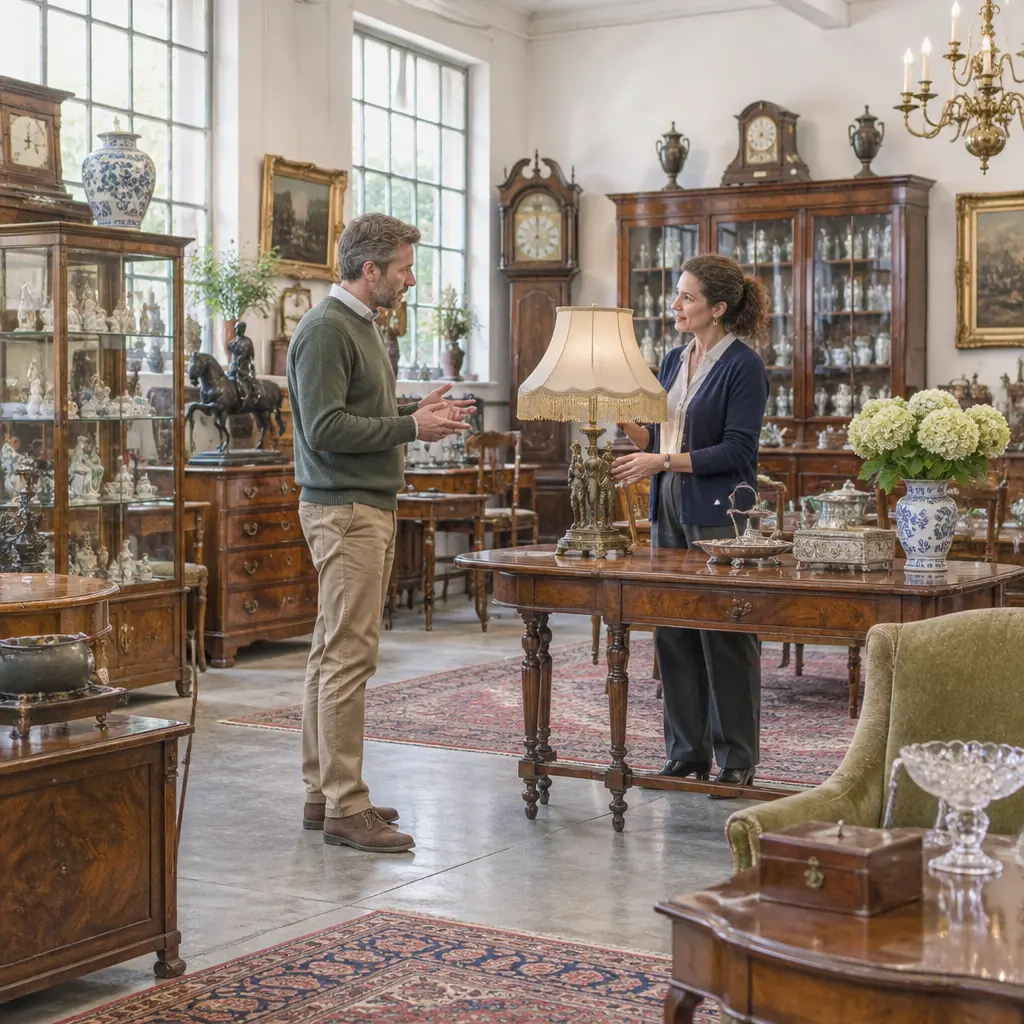
A useful sequence is to show genuine interest, ask about the object, learn whether the price is firm, and then make one considered proposal. For instance: “I like this lamp. I noticed the shade has a crack, and I’ve seen similar examples sell for less. Would you consider $180?” This gives the dealer context and room to respond without turning the exchange into a confrontation.
Questions invite information before negotiation
Open-ended questions help establish whether a negotiation makes sense. Try asking, “Could you tell me what you know about its age?” or “Is the price flexible?” If the dealer explains that the price is firm, accept that answer unless new information changes the discussion. If the dealer is open to offers, ask about condition and documentation before naming a number. This order makes the conversation collaborative and can reveal details that affect your decision.
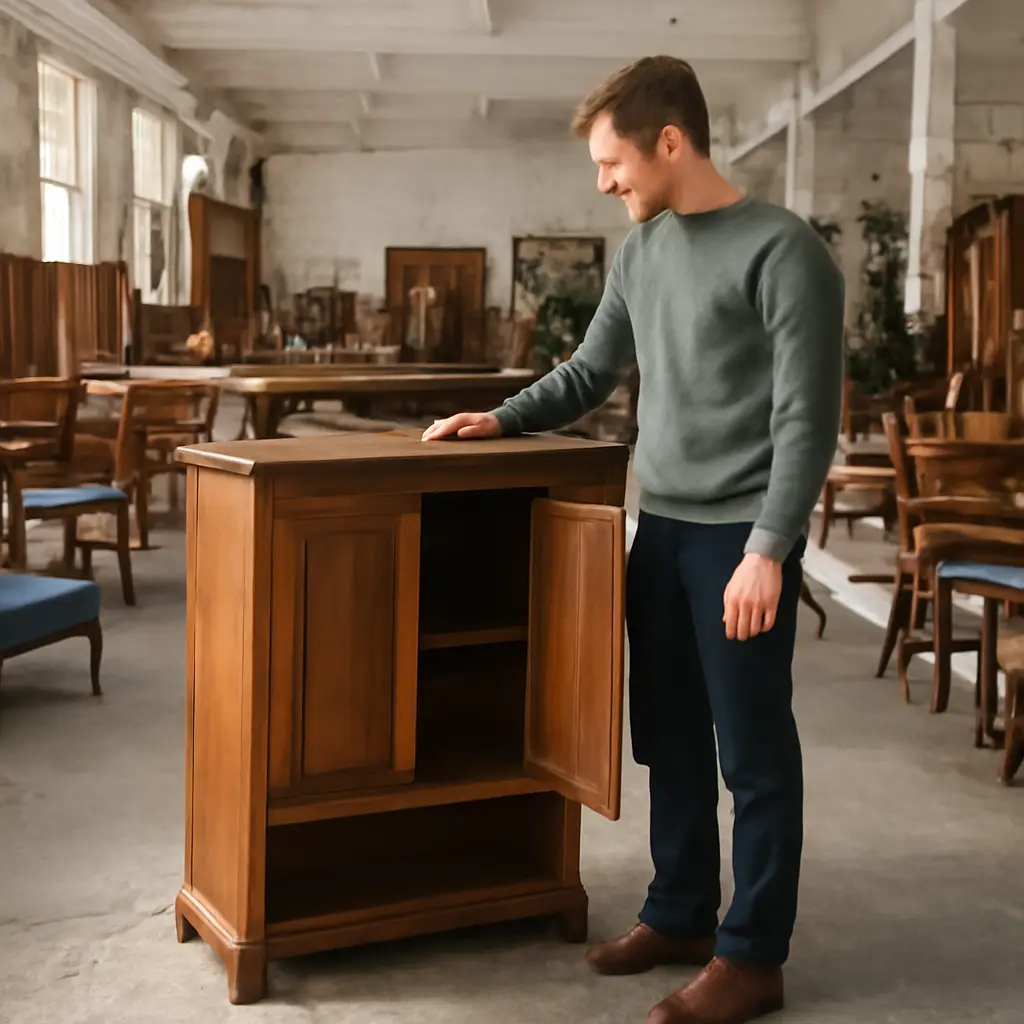
A practical example is a buyer interested in a vintage cabinet with a replaced handle. Rather than announcing that the cabinet is overpriced, the buyer can ask whether the replacement is reflected in the price, then make an offer that accounts for the repair. The dealer may agree, counter, or explain why the price remains unchanged. Each response gives the buyer a basis for deciding whether to proceed.
Reasoned offers and counteroffers preserve goodwill
A reasoned offer states what you are willing to pay and, briefly, why. Keep it sincere: do not invent defects, fabricate competing offers, or claim that an online listing proves a value when it does not. If the dealer counters, decide whether the new figure fits your budget and the evidence you have gathered. You can also ask whether another arrangement is possible, such as a modest price adjustment for buying multiple items, without assuming the dealer must agree.
Negotiation research commonly describes bargaining as an exchange of proposals, but antique retail has an important practical constraint: many objects are unique, and dealer margins are not visible to the buyer. A fair-minded offer therefore avoids treating a mass-produced retail discount as a universal benchmark. If you and the dealer cannot agree, a courteous “Thank you—I’ll think about it” keeps the interaction respectful and leaves room to return.
Shop etiquette guides when and how to bargain
Shop etiquette is the set of considerate behaviors that lets a buyer explore a purchase without disrupting the dealer or putting an object at risk. Timing matters: begin when the dealer is available, rather than interrupting another customer or trying to force a quick decision. A calm tone, patience, and respect for the shop’s policies make it easier for both sides to discuss price. These habits matter whether the shop specializes in furniture, jewelry, books, art, or decorative objects.
Timing and shop policies set expectations
Some dealers negotiate; others use fixed pricing, especially for items whose value is supported by research or whose prices are already competitive. Ask rather than assume. A shop may also have different policies for consigned goods, recently listed pieces, or items sold on behalf of another owner. If the price is firm, do not repeatedly press after receiving a clear answer.
Consider a busy weekend afternoon: the dealer may be helping several visitors and have little time for an extended discussion. A brief question about flexibility is appropriate, but a drawn-out negotiation may be better saved for a quieter moment. If the shop has posted terms, read them before bargaining; posted policies are part of the transaction.
Careful handling demonstrates respect
Careful handling means asking permission before touching or moving an object and following any instructions the dealer gives. Do not test mechanisms, open drawers, try on jewelry, or reposition fragile items without consent. The Smithsonian’s guidance on preservation highlights the importance of minimizing risks to objects; in a retail setting, care also reassures the dealer that your interest is genuine.
If you notice a possible flaw, describe it neutrally and ask about it. “Is this a later repair?” is more constructive than “This is damaged, so it can’t be worth that much.” The first question seeks information; the second turns a condition observation into a personal challenge.
Buying decisions balance price, confidence, and value
A good buying decision considers more than the lowest possible price. It weighs the object’s condition and evidence, the buyer’s budget, the dealer’s explanation, and the item’s personal or practical value. Because antiques are often individually distinctive, there may be no perfect substitute at another shop. Conversely, scarcity or emotional appeal should not pressure you into spending more than you can afford.
A walk-away point prevents pressure
A walk-away point is the maximum price you are prepared to pay before beginning the negotiation. Set it after considering your budget, research, condition concerns, and any likely transport or restoration costs. If the dealer’s counteroffer exceeds that limit, decline politely. This simple boundary reduces the risk of making an impulsive purchase just because the conversation has become competitive.
For a large piece of furniture, for example, the total cost may include delivery and repair as well as the tagged price. Asking about those costs before settling on a number helps you compare the full purchase rather than a misleading partial figure. The Federal Trade Commission’s consumer guidance encourages buyers to understand the terms and costs of a transaction; the same caution is useful when arranging antique purchases.
Authenticity and expertise may justify paying the asking price
Authenticity is the question of whether an object is what it is represented to be; assessing it can require specialist knowledge, documentation, or close examination. A dealer’s research and expertise may be part of the value offered, particularly when the item is rare or has a documented history. Ask what supports an attribution, and seek an independent specialist when the stakes warrant it. Do not assume that a low price is proof of a bargain or that a high price guarantees authenticity.
If the dealer provides convincing documentation, the condition is sound, and the price is within your research-based range, paying the asking price can be a sensible choice. The aim is not to win a discount at any cost; it is to make a purchase you understand and feel comfortable with. If important claims remain uncertain, pause and verify them before committing.
Conclusion: antique-shop haggling works best as a respectful exchange
Respectful haggling begins with research, accounts for condition and provenance, and proceeds through polite questions and a reasoned offer. Good shop etiquette—choosing an appropriate moment, handling items carefully, and accepting a firm-price answer—protects both the relationship and the object. Set a walk-away point, consider the full cost, and remember that paying the marked price may be worthwhile when the item and its supporting evidence justify it.
Before your next visit, compare credible completed sales, write down your budget, and prepare one concise question about price flexibility. For further guidance, consult consumer-protection resources and museum or specialist advice on evaluating and caring for antiques. A thoughtful conversation can lead to a fair purchase without making the dealer feel disrespected.
Sources: Federal Trade Commission, Shopping and Consumer Tips, https://consumer.ftc.gov/shopping-and-consumer-tips; Smithsonian Museum Conservation Institute, Caring for Your Treasures, https://mci.si.edu/caring-your-treasures; American Alliance of Museums, Caring for Your Collections, https://www.aam-us.org/programs/resource-library/caring-for-your-collections/