
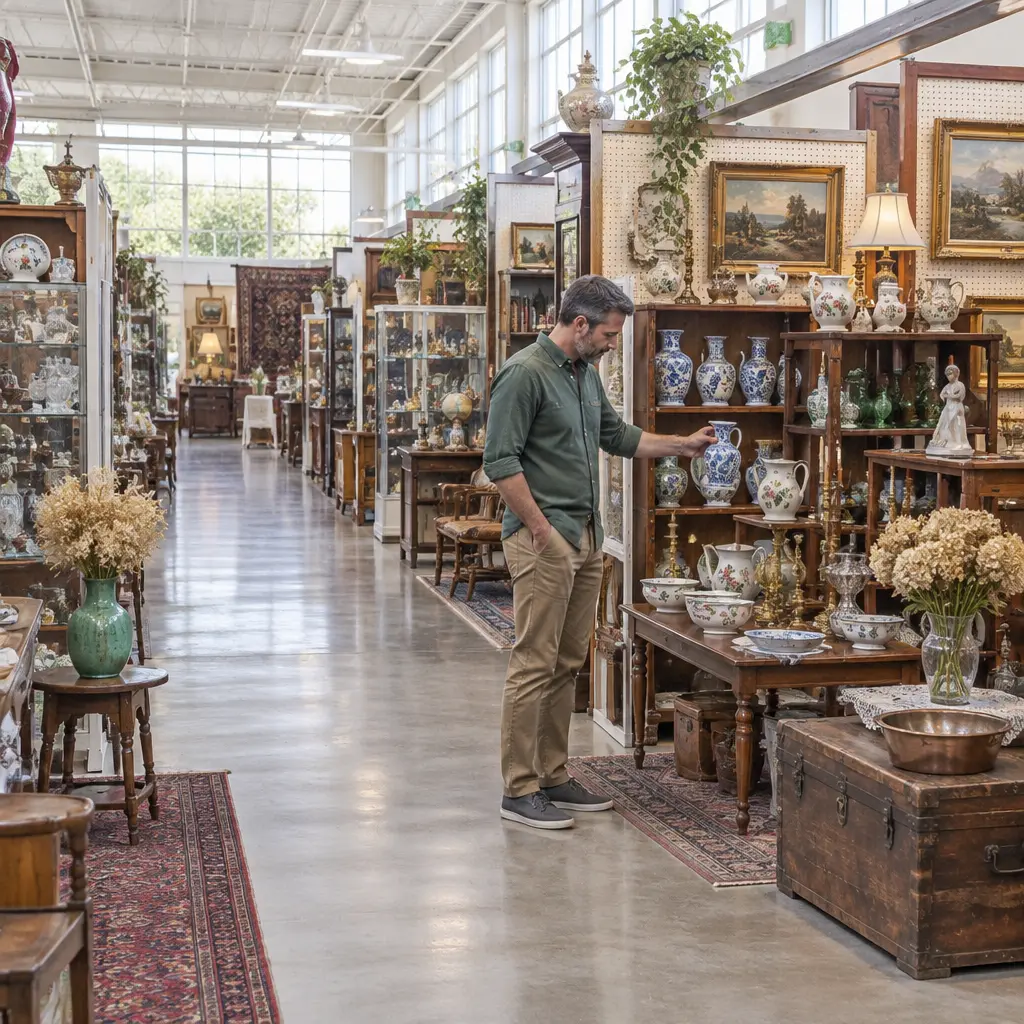
An antique mall is a multi-vendor marketplace where independent dealers sell antiques, vintage goods, and collectibles from shared retail space. It is one of the best places to find unique vintage items because many dealers bring different specialties, eras, and tastes under one roof—creating a varied, changing selection that a single shop or online search may not offer. The appeal is more than variety: shoppers can compare pieces in person, discover unexpected objects, learn their stories, and assess condition before buying. U.S. Census Bureau data show that the United States had more than 1.1 million retail trade establishments in 2022, illustrating the breadth of the country’s retail landscape, while the National Endowment for the Arts has documented the enduring importance of arts and crafts participation. Antique malls turn that appetite for distinctive, well-made objects into a hands-on treasure hunt.
Antique malls make unique vintage finds easier to discover
An antique mall is generally a shared retail venue divided into booths or display areas leased or managed by multiple sellers. “Antique” commonly refers to an item at least 100 years old under U.S. customs law; “vintage” is used more broadly for older goods, often from the twentieth century, without one universal age cutoff. Because dealers choose and curate their own stock, a mall may bring together furniture, clothing, jewelry, art, books, toys, glassware, and household objects in one visit.
That mix matters to shoppers seeking character rather than a standardized product. A mall can make it possible to compare several eras and price points, encounter objects that were not on a shopping list, and inspect details such as materials, repairs, maker’s marks, and wear. Its inventory changes as items sell and dealers restock, so a later visit can reveal a different selection. The National Association of Resale and Thrift Shops describes resale as a broad retail category, but antique malls have a distinctive advantage: they combine secondhand merchandise with specialist dealers and collectible objects.
Many dealers create breadth and specialist depth
A multi-dealer mall is a collection of independent inventories rather than a single shop’s buying choices. One booth may focus on mid-century furniture, another on vintage textiles, and another on records or advertising signs. This variety—spanning broad categories and narrow specialties—is a key reason the format works for both casual browsers and collectors looking for a specific period or object.
For example, a shopper furnishing a room might compare lamps, ceramics, and small furniture across several booths, while a collector can concentrate on a specialist’s selection of a particular maker or era. The mall’s layout makes these comparisons convenient, though the stock, dealer expertise, and pricing practices vary by location. Ask staff or sellers about booth policies, item history, and whether prices are negotiable rather than assuming every dealer operates the same way.
Changing stock rewards repeat visits
Antique mall inventory is dynamic: items may sell, new pieces may arrive, and dealers may rearrange displays. This turnover gives the format a discovery advantage over a fixed catalogue. A shopper who visits regularly may see newly listed objects that were not available on a previous trip.
There is no reliable national statistic for how quickly every antique mall turns over its stock; the pace depends on the venue, its dealers, and local demand. Treating a mall as an evolving marketplace—not a guaranteed source for a particular item—helps set realistic expectations. If you are searching for something specific, call ahead, share a description or photograph, and ask whether the venue can contact dealers who specialize in it.
In-person browsing helps shoppers assess vintage finds
A vintage item’s condition and construction can be difficult to judge from a photograph. In a mall, shoppers can examine surfaces, seams, joints, labels, and signs of repair; compare similar objects side by side; and ask questions before committing. These advantages are especially useful for furniture, clothing, ceramics, and other goods where size, feel, or visible wear affects both suitability and value.
Condition, materials, and fit are easier to check
A careful inspection means looking for cracks, stains, loose joints, missing components, replaced hardware, and previous repairs. For furniture, check stability and measure the piece against doorways and the intended space. For clothing, inspect seams, fasteners, lining, and fabric damage. For glass or ceramics, look for chips and hairline cracks in good light.
The Federal Trade Commission advises consumers to understand a product’s condition and the seller’s terms when buying. Antique malls are not automatically exempt from ordinary consumer caution: return policies, guarantees, and responsibility for defects can differ among venues and dealers. Before paying, confirm whether an item is sold as-is, whether a return is possible, and what the price includes.
Provenance and maker’s marks can add context
Provenance is an item’s ownership or history, while maker’s marks, labels, signatures, and construction details can help identify its origin or production period. Dealers may know where an object came from or how they identified it, but a seller’s description is not the same as independent authentication. For valuable or potentially significant pieces, compare the claim with museum catalogues, reference books, or a qualified specialist.
This is where the human side of mall shopping can be useful: a conversation may reveal an object’s previous use, restoration, or source. Keep claims in perspective, especially when an item is described as rare, attributed to a well-known maker, or unusually valuable. Ask what evidence supports the description and retain receipts or written documentation for important purchases.
Antique malls support sustainable reuse and personal style
Buying secondhand keeps an existing object in use and may reduce demand for newly manufactured alternatives. The environmental benefit depends on factors such as transportation, restoration, durability, and whether the purchase actually replaces a new product, so resale should not be treated as impact-free. Still, choosing a well-made pre-owned piece can be a practical way to extend its useful life.
Reuse can extend the life of durable goods
The U.S. Environmental Protection Agency’s materials-management guidance emphasizes waste prevention and reuse as ways to conserve resources and reduce the amount of material sent for disposal. Antique malls make reuse visible: furniture, tableware, clothing, and household decor can find new owners rather than being discarded.
A real-world example is furnishing a home with a combination of secondhand and new pieces. A sturdy vintage table may serve for years, while replacement hardware or a professional repair can make it functional again. Before buying, consider whether the object is safe and suitable for its intended use; older electrical items, children’s products, and materials with uncertain composition may need expert assessment.
Distinctive objects help create an individual look
Vintage shopping offers access to designs that may no longer be made, from particular patterns and finishes to unusual shapes and regional crafts. Combining pieces from different periods can create a home or wardrobe that feels personal rather than uniform. The best approach is to choose objects for their function, quality, and appeal—not simply because they are old.
Collectors can also use antique malls to learn by comparison. Seeing several examples of a style or material in one visit can sharpen the eye for differences in construction, condition, and design. The Smithsonian’s collecting and preservation resources offer a useful reminder that objects need appropriate care: light, humidity, handling, and storage can affect how materials age.
A practical strategy makes antique-mall shopping more rewarding
A little preparation helps shoppers make thoughtful choices without losing the pleasure of browsing. Set a budget, bring measurements for larger purchases, and decide which qualities matter most—such as material, era, size, or condition. Photograph an item’s label or booth number when you want to compare options later, and ask permission before taking pictures.
Use a simple inspection checklist
- Check the item’s condition, including hidden surfaces, fasteners, joints, and repairs.
- Look for labels, signatures, stamps, or other clues, and distinguish evidence from a seller’s estimate.
- Confirm dimensions, weight, transport arrangements, and any delivery fees.
- Ask about the return policy, discounts, and whether the item is sold as-is.
- Compare similar pieces before paying, especially for expensive or collectible items.
Balance the thrill of discovery with informed buying
A flea-market-style treasure hunt can encourage impulse purchases, so pause before buying costly items. Research comparable examples, consider repair expenses, and seek a specialist’s opinion when authenticity or safety matters. For an ordinary decorative purchase, personal enjoyment may be the main measure of success; for an investment-sized purchase, evidence and condition deserve closer scrutiny.
A useful visit does not have to end with a purchase. Browsing can reveal new interests, help identify a style, or teach you what to look for next time. That blend of discovery, comparison, and conversation is what makes antique malls more than a row of booths.
Conclusion: antique malls make vintage discovery personal
Antique malls stand out because many dealers, changing inventory, and in-person inspection come together in one place. Shoppers can explore a wide range of vintage categories, assess condition and construction firsthand, learn about an object’s possible history, and find pieces that support a distinctive style. Buying pre-owned can also extend the useful life of durable goods, though condition, safety, transport, and seller policies still matter.
For your next visit, bring measurements, set a comfortable budget, ask questions, and take time to compare. Whether you leave with a collectible, a practical household piece, or simply a better sense of what you like, an antique mall offers a rewarding way to discover objects with history and character.
Sources: U.S. Customs and Border Protection, “Antiques,” https://www.cbp.gov/trade/basic-import-export/importing-car; U.S. Census Bureau, “Statistics of U.S. Businesses,” https://www.census.gov/programs-surveys/susb.html; National Association of Resale and Thrift Shops, “About NARTS,” https://www.narts.org/; Federal Trade Commission, “Buying Used Goods,” https://consumer.ftc.gov/; U.S. Environmental Protection Agency, “Reducing and Reusing Basics,” https://www.epa.gov/recycle/reducing-and-reusing-basics; Smithsonian Institution, “Caring for Your Treasures,” https://www.si.edu/mci/english/learn_more/taking_care/index.html; National Endowment for the Arts, “Arts Participation Patterns in 2022,” https://www.arts.gov/impact/research/publications/arts-participation-patterns-2022-highlights-survey-public-participation-arts


