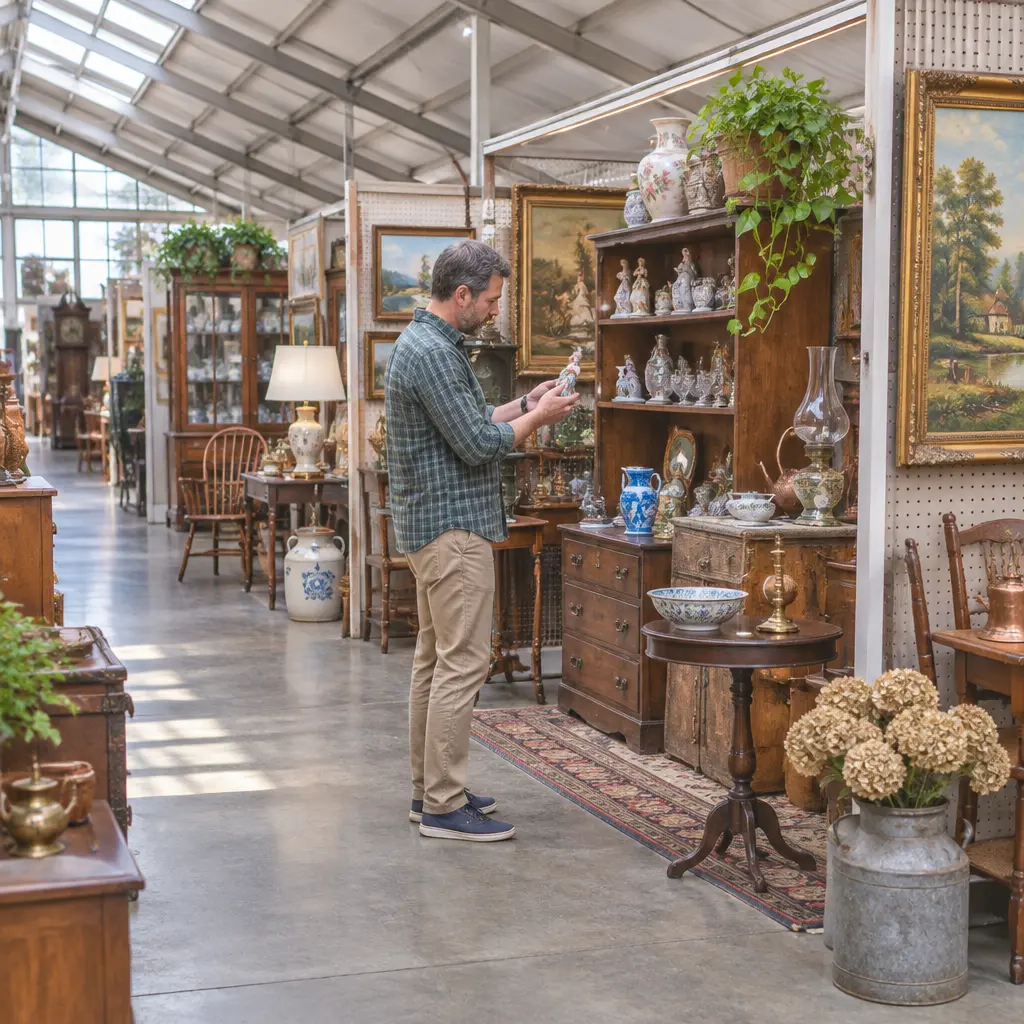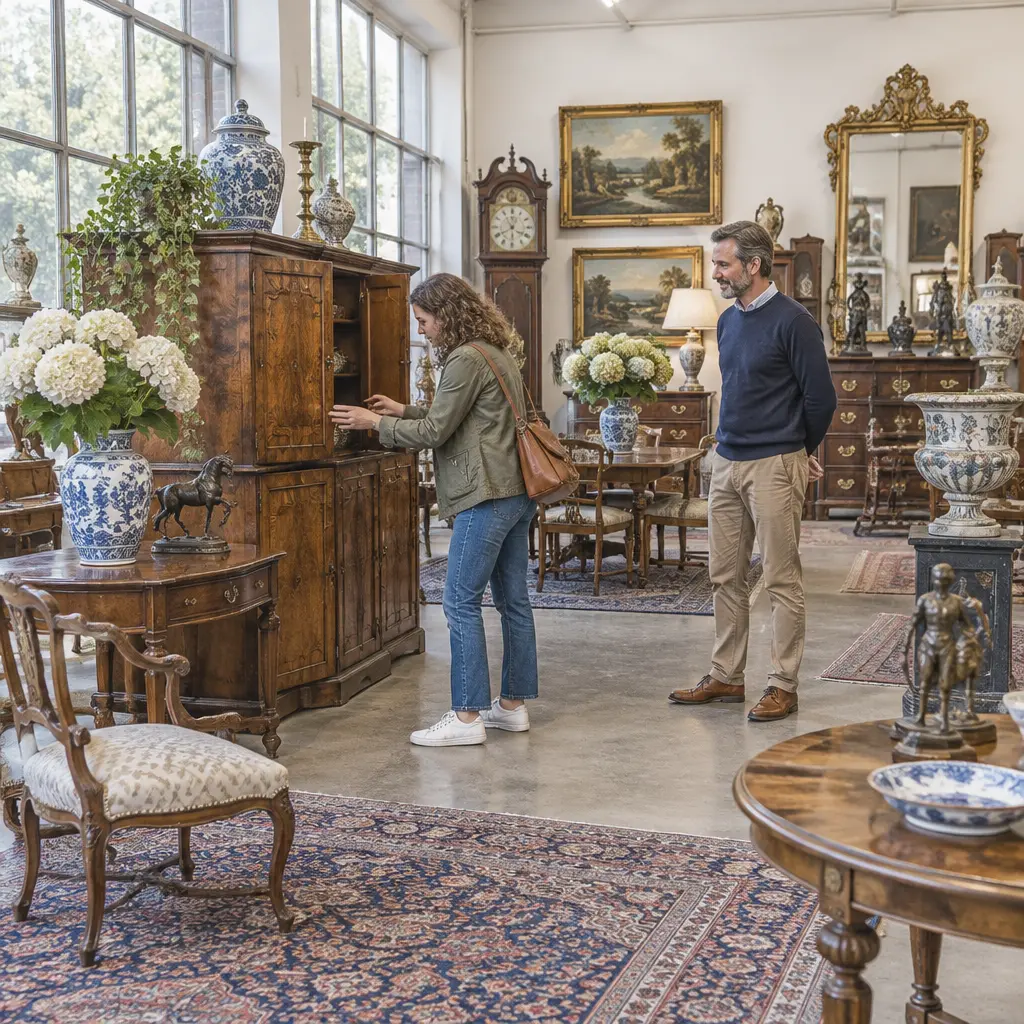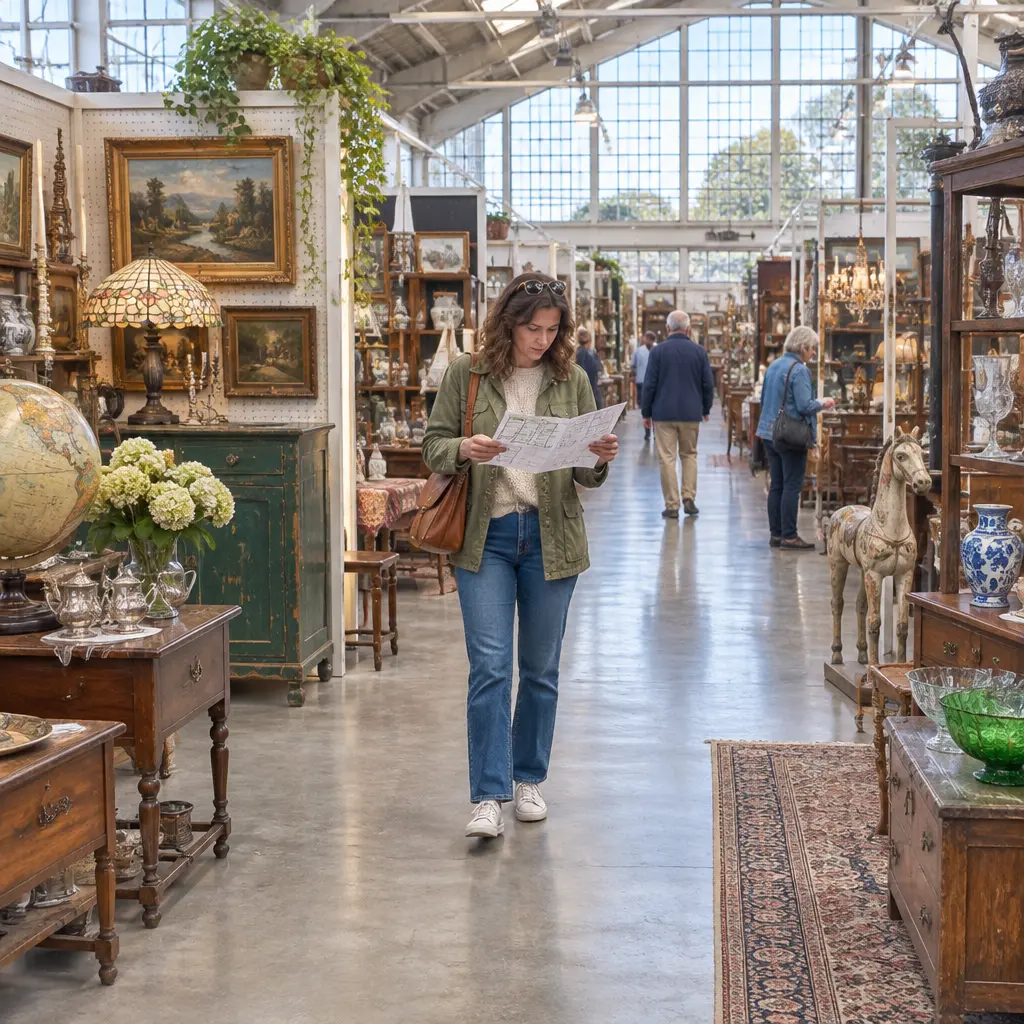
Antique mall navigation mapping vendor specialties before random aisle wandering is a simple way to turn a large, multi-dealer shop into a more focused treasure hunt. An antique mall is a retail venue where independent dealers display goods in separate booths or cases, so the mall’s directory, booth labels, and staff knowledge can help shoppers locate relevant specialties before browsing. Mapping those specialties—such as vintage jewelry, furniture, ceramics, records, or advertising—can reduce backtracking and make limited shopping time more productive. There is no dependable published statistic showing how much time this method saves at antique malls, but the underlying challenge is real: the U.S. Census Bureau counts retail businesses across many categories, while individual malls organize their own dealer spaces and inventories differently. A practical plan therefore combines a mall map, vendor descriptions, a short priority list, and a flexible route.
Vendor Specialty Mapping Improves Antique Mall Navigation
Vendor specialty mapping means identifying which dealers carry the kinds of objects a shopper wants and locating their booths before beginning a visit. It is a practical planning method rather than a formal retail-industry standard. The National Association of Resale and Thrift Shops describes resale retail as a broad market that includes varied secondhand goods and business models; antique malls add another layer because each dealer may curate a distinct assortment within a shared venue.
The method is useful because a mall’s physical layout and its inventory are not necessarily organized by product category. One dealer may specialize in mid-century lighting, while another booth nearby mixes glassware, books, and small furniture. A specialty map helps shoppers connect a goal—such as finding a vintage brooch—with a location, while leaving room for the unexpected discoveries that make browsing enjoyable.
Specialty mapping and its main components
A useful specialty map links four pieces of information: the item category, the dealer or booth identifier, its location, and any relevant shopping notes. Notes might include whether the dealer accepts offers, whether items are in a locked case, or whether the booth is known for a particular period. These details should be confirmed with mall staff or current signage because inventory and dealer spaces can change.
- Categories: broad interests such as furniture, textiles, toys, books, or kitchenware.
- Locations: booth numbers, aisle names, floor levels, or nearby landmarks.
- Priority: must-see specialties, optional stops, and general browsing areas.
- Constraints: budget, object dimensions, transport needs, and time available.
This structure turns a vague shopping goal into a workable route. For example, a shopper looking for vintage records can first locate dealers identified with music or media, then browse adjacent booths for related finds such as concert posters or turntables.
Why a route matters in a multi-dealer venue
A route is a planned sequence through the venue, not a commitment to ignore other aisles. It can reduce repeated crossings when a shopper has a narrow goal, especially in a large mall or when carrying purchases. A simple route might start with the highest-priority booth, continue through nearby related specialties, and end with a slower pass through general merchandise.
Retail floor plans are designed for navigation and merchandising, but antique malls often have irregular booth boundaries and changing displays. The International Council of Shopping Centers’ research on shopping environments emphasizes the importance of the physical retail setting; for antique shoppers, the practical equivalent is to use posted maps while treating them as orientation aids rather than guarantees of current stock.
Mall Maps and Dealer Directories Support Specialty Mapping
A mall map is a visual guide to the venue’s layout, while a dealer directory identifies vendors, booth numbers, or merchandise categories. Together, they provide the basic evidence needed to plan a search. Some malls publish directories online; others provide printed maps at the entrance or rely on staff and booth signs. Because dealer inventories are dynamic, a directory is a starting point, not a live catalog.
Reading booth numbers and aisle landmarks
Booth numbers are identifiers assigned by the mall, and aisle landmarks are memorable features—such as the checkout counter, stairway, or central display—that help shoppers orient themselves. Before walking, check whether the numbering runs consecutively, by section, or by floor. Marking a few landmarks on a paper map can be more useful than trying to remember a string of booth numbers.
If a booth number is missing or a section has been rearranged, ask an employee to verify the location. This small check prevents a common planning error: treating an old online floor plan as current when dealers have moved.
Using dealer descriptions as search clues
Dealer descriptions are short labels for a vendor’s typical stock, such as “vintage clothing,” “estate jewelry,” or “industrial décor.” They are useful clues, but they do not guarantee that a particular item is available. The U.S. Federal Trade Commission advises consumers to review product claims carefully in general marketplace transactions; similarly, shoppers should confirm an object’s age, condition, and provenance with the dealer rather than assuming that a category label establishes authenticity.
Use both broad and narrow search terms. Someone seeking a 1960s cocktail dress might check clothing dealers, but also booths described as textiles, accessories, or vintage fashion. This approach accounts for the fact that independent dealers often group merchandise according to personal curation rather than a standardized classification system.
Specialty Categories Create Practical Search Routes
Specialty categories are groups of related merchandise used to organize a shopper’s search. Common categories include furniture and décor, jewelry and accessories, ceramics and glass, books and ephemera, toys and collectibles, and clothing and textiles. These are useful hyponyms of antique-mall merchandise: each broad category can be narrowed into more specific interests, such as Art Deco jewelry, Depression glass, railway timetables, or vintage denim.
Furniture, lighting, and home décor
Furniture and décor searches benefit from a route that accounts for object size and transport. Identify furniture-focused dealers first, then look for adjacent specialties such as lamps, mirrors, rugs, or hardware. Measure the intended space at home and note vehicle capacity before shopping; a promising piece is not a practical purchase if it cannot be moved safely.
For larger objects, ask whether the mall offers delivery or can hold an item while arrangements are made. The U.S. Consumer Product Safety Commission recommends checking older furniture for hazards such as unstable construction and, where relevant, lead-containing finishes. A specialty map can locate likely dealers, but inspection remains essential.
Jewelry, watches, and small collectibles
Small, higher-value items are often displayed in locked cases, so map the relevant booths and ask staff how to request assistance. For jewelry, record the material and any stated maker or hallmark, then compare the dealer’s description with the object itself. The Gemological Institute of America explains that gemstones are assessed through characteristics such as color, clarity, cut, and carat weight; those factors can guide questions, but a mall label alone is not an independent appraisal.
Collectors should also distinguish an item’s age from its rarity and condition. A focused route can help compare similar pieces across several vendors before making a decision.
Books, paper goods, records, and ephemera
Paper collectibles—such as postcards, maps, magazines, sheet music, and photographs—may be spread across book, local-history, or general-collectible booths. Search by subject as well as format: a shopper seeking travel posters might find them in an art-print booth rather than a paper dealer’s section. For records, inspect the sleeve and disc condition and ask whether the vendor permits a closer look.
A category map is especially useful here because small paper items can be easy to overlook. Add a note to revisit likely booths after the first pass if a case is busy or a dealer is temporarily away.
Clothing, textiles, toys, and household objects
Clothing and textile searches can be organized around era, material, or use, while toys and household collectibles may be grouped by manufacturer, franchise, or decade. These categories often overlap: a booth selling vintage kitchenware may also carry advertising tins, and a clothing dealer may have accessories or sewing patterns. Include related specialties in the route rather than limiting the search to a single label.
A Step-by-Step Plan Prevents Random Aisle Wandering
A practical navigation plan begins before arrival and stays adaptable inside the mall. The aim is not to eliminate browsing; it is to make sure priority searches happen before time or energy runs out.
- Write down the target items, acceptable alternatives, and spending limit.
- Check the mall’s website or call ahead for hours, maps, accessibility details, and dealer categories.
- At the entrance, verify the current floor plan and ask whether any sections or vendors have moved.
- Mark priority booths and group nearby specialties into one route.
- Record promising items, booth numbers, prices, and questions before comparing options.
- Leave time for a relaxed second pass through adjacent or general-merchandise areas.
Build a short priority list
A priority list separates essential searches from open-ended browsing. Keep it concise—three to five target categories is often manageable for a single visit, though the right number depends on the mall’s size and the shopper’s available time. Include practical limits such as maximum price, preferred dimensions, and acceptable condition.
Use a flexible route and keep notes
A flexible route groups nearby booths but allows detours for interesting displays. Notes can be kept on paper or in a phone, provided photography is allowed. Ask before photographing dealers’ merchandise, and avoid blocking aisles while comparing items. If the venue is busy, complete the highest-priority stops first and return to lower-priority areas later.
Compare, inspect, and verify before buying
Navigation helps shoppers find candidates; it does not establish value or authenticity. Compare similar objects across dealers, inspect condition, and ask about repairs, returns, and provenance. The American Society of Appraisers distinguishes an appraisal—a reasoned opinion of value prepared for a defined purpose—from a casual price estimate. For costly or specialized purchases, seek an independent qualified appraisal rather than relying solely on a booth price or verbal claim.
A Real-World Example: Planning a Focused Vintage-Home Search
Consider a shopper furnishing a small living room who wants a table lamp, a framed print, and a set of ceramic bowls. Instead of beginning at the first aisle, the shopper checks the directory for lighting, art, and ceramics dealers, then marks their booth locations. At the mall, staff confirm that the map is current. The shopper visits the lighting booths first, checks the print dealers nearby, and finishes with ceramics, noting prices and condition before deciding.
This example illustrates why mapping is more than a shortcut: it makes comparison easier. It also preserves space for discovery. On the route between the planned stops, the shopper might find a suitable side table or a dealer who carries all three categories, improving efficiency without turning the visit into a rigid checklist.
Conclusion: Map Specialties, Then Browse with Purpose
Antique mall navigation mapping works by connecting vendor specialties to booth locations, grouping related categories, and arranging priority stops into a flexible route. Mall maps and dealer directories provide orientation; specialty categories make searches more precise; and a short plan helps shoppers compare objects without repeatedly crossing the venue. Since dealer stock and layouts change, confirm details on arrival and verify an item’s condition, age, and claims before purchase. Before your next visit, list your target categories, check the mall’s current directory, and ask staff for help turning that information into a practical route.
Sources: National Association of Resale and Thrift Shops, About NARTS and the resale industry, https://www.narts.org/; U.S. Census Bureau, Statistics of U.S. Businesses, https://www.census.gov/programs-surveys/susb.html; International Council of Shopping Centers, Research and Insights, https://www.icsc.com/news-and-views/research; Federal Trade Commission, Shopping and consumer advice, https://consumer.ftc.gov/; U.S. Consumer Product Safety Commission, Furniture and home safety, https://www.cpsc.gov/Safety-Education/Safety-Guides/Home; Gemological Institute of America, The 4Cs of Diamond Quality, https://www.gia.edu/diamond-quality-factor; American Society of Appraisers, What Is an Appraisal?, https://www.appraisers.org/