Primitive decor is a style of home furnishings that values simple forms, handmade character, and signs of age over flawless finishes. Its charm comes from patina—the visible changes that time and use leave on materials—and from irregularities that suggest an object was made or lived with rather than mass-produced to look perfect. This preference has cultural roots in folk craft and historic interiors, and it resonates with today’s interest in reuse: the U.S. Environmental Protection Agency estimates that 12.1 million tons of furniture and furnishings entered the municipal solid-waste stream in 2018. Understanding primitive decor means learning to distinguish meaningful wear from damage, recognize the materials and forms that carry the look, and choose and care for pieces responsibly.
Primitive decor values patina and imperfection
Primitive decor is an interior style inspired by utilitarian objects, rural life, and vernacular making. The term generally describes furniture and decorative pieces with straightforward construction, restrained ornament, and a visibly aged or handmade appearance. It is not a single historical period or a guarantee that an object is old: contemporary makers also create primitive-inspired work.
The style’s central attribute is character rather than polish. Scratches, uneven paint, tool marks, worn edges, and variations in color can make an object feel particular and connected to use. But “imperfect” does not mean unsafe, unstable, or carelessly made. A valuable patina is usually an attractive surface history; structural failure, active mold, severe insect damage, and hazardous finishes are problems to assess separately.
Patina: change that records use and age
Patina is the surface character that develops as a material ages through exposure, handling, oxidation, and care. On wood, it may appear as mellowed color, softened edges, or a burnished area where hands often rested. On iron and copper, oxidation can produce darkening or colored surface changes. The Smithsonian Museum Conservation Institute explains that materials respond to their environment over time; those changes may be stable and meaningful, or they may signal active deterioration requiring attention.
In primitive interiors, patina is often celebrated because it makes an object’s history legible. A worn tabletop can suggest years of work, while faded paint may reveal layers of decoration. The distinction to keep in mind is stability: a settled, dry surface differs from flaking paint, active corrosion, or wood that has become soft and crumbly.
Imperfection: evidence of handwork, not neglect
Imperfection in primitive decor includes asymmetry, irregular dimensions, visible joinery, and finish variations. These qualities can arise from hand tools, locally available materials, practical construction, or years of repair. They contrast with factory-made uniformity, but they should not be treated as proof of age: distressing and uneven finishes are also deliberately produced in modern furniture.
A useful evaluation considers both appearance and function. A slightly uneven hand-built stool may be stable and usable; a chair with a loose joint may need repair before it is safe. This approach preserves the style’s honest character without confusing aesthetic wear with neglect.
Primitive decor takes form through materials and objects
Once patina and irregularity are understood as surface qualities, the next step is to identify the materials and object types that commonly express them. Primitive decor often draws on practical household forms: storage, seating, lighting, and textiles made to serve a purpose before they became decorative focal points.
Wood, metal, and natural finishes
Wood is a defining material because grain, tool marks, knots, and worn finishes remain visible. Pine and other readily worked woods are common in primitive-inspired furniture, though the style is not limited to a particular species. Iron hardware, tinware, baskets, pottery, and simple woven materials can add contrasting textures. Rather than applying a uniform glossy coating, decorators often choose matte, rubbed, waxed, or naturally weathered finishes.
The material matters for care. The National Park Service’s museum guidance emphasizes that light, humidity, temperature, dust, and handling affect collections. For household objects, the same basic principle is useful: keep wood and textiles away from persistent damp, avoid harsh cleaning that strips a finish, and test any treatment on an inconspicuous area. Older painted objects deserve particular caution because some historic paints may contain lead.
Furniture and functional antiques
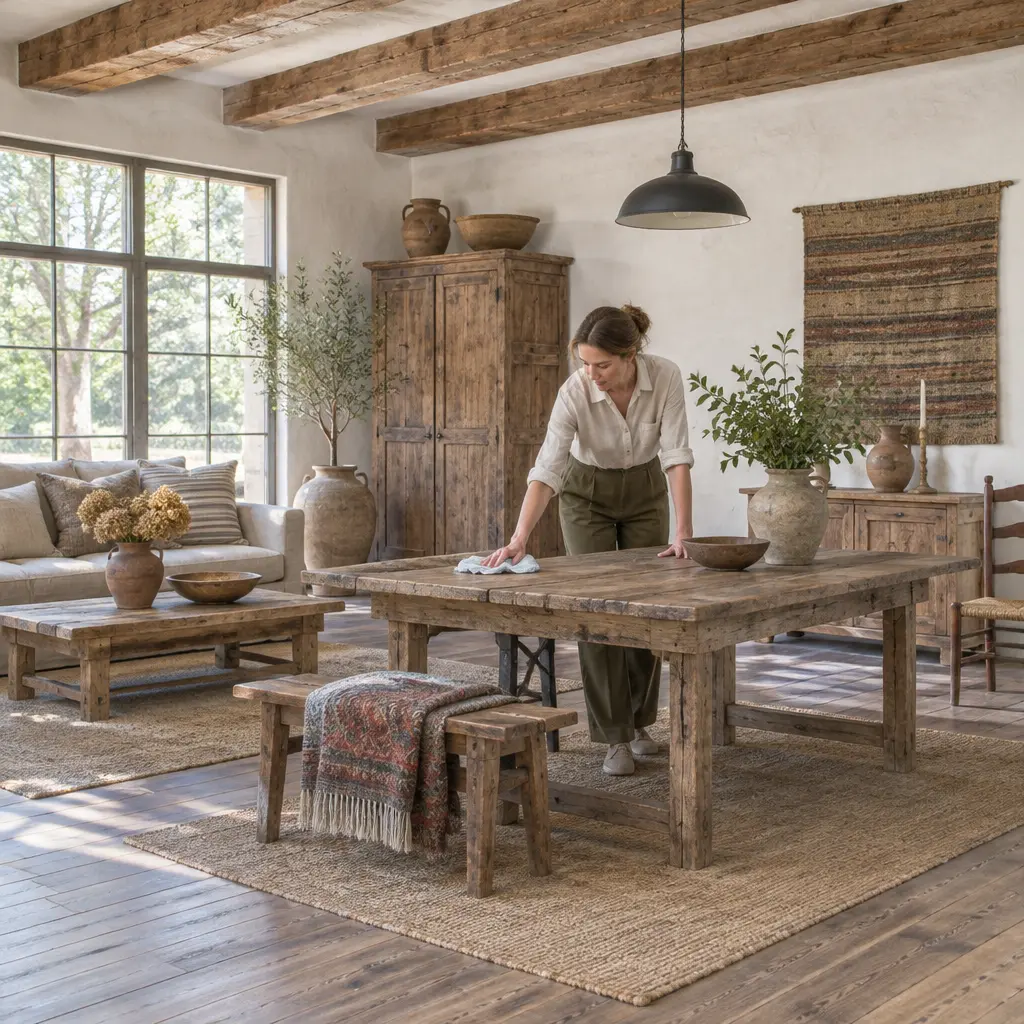
Primitive furniture favors direct, useful forms: plank tables, ladder-back or spindle chairs, blanket chests, cupboards, stools, and open shelves. Such forms are sometimes grouped with country, folk, or early American interiors, though these labels overlap and do not mean every item is historically authentic. The most successful pieces show a clear relationship between construction and use: sturdy proportions, accessible storage, and simple joinery.
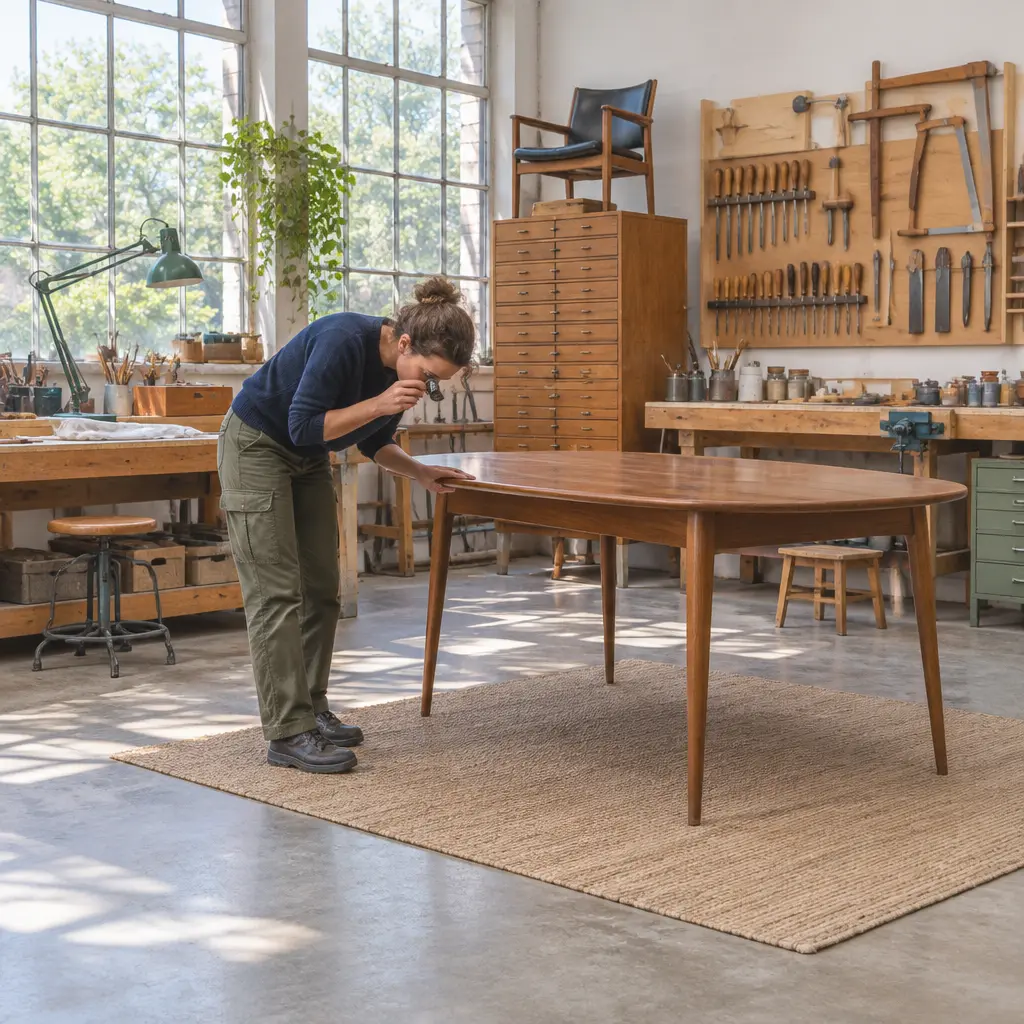
When buying, inspect the underside, joints, fasteners, and areas that bear weight. Look for repairs that are sound and compatible, and ask whether a surface has been repainted, stripped, or artificially distressed. The American Institute for Conservation recommends consulting a qualified conservator when an object has significant historical, artistic, or monetary value and needs treatment.
Textiles, pottery, and small decorative objects
Textiles and small objects add softness and evidence of hand production. Homespun-looking cloth, quilts, hooked rugs, baskets, stoneware, wooden bowls, and handmade tools can complement simple furniture. Their appeal often lies in irregular pattern, variation in weave or glaze, and traces of repeated use rather than pristine presentation.
These objects also benefit from selective display. A few well-chosen pieces make their texture and form easier to appreciate than a crowded arrangement. Keep fragile textiles out of strong direct sunlight, and avoid using valuable or unstable antiques in ways that could cause further wear.
Primitive decor connects craft history with reuse
Primitive style is not simply a visual recipe; it reflects broader ideas about making, resourcefulness, and the value of existing objects. Folk and vernacular traditions developed around local materials and practical needs, while contemporary primitive decor often reinterprets those traditions through antiques, reproductions, and reclaimed materials.
Folk craft and vernacular design
Vernacular design refers broadly to buildings and objects shaped by local conditions, available materials, and customary knowledge rather than by formal design systems alone. Primitive interiors draw on this legacy through plain construction, practical shapes, and decoration that is modest or symbolic. The Smithsonian American Art Museum’s folk and self-taught art collections illustrate how individual makers can work outside academic conventions while producing objects with strong cultural and personal meaning.
That history cautions against treating “primitive” as a synonym for crude or culturally unsophisticated. The term is used in the decor trade for a particular rustic aesthetic, but it can also carry outdated or reductive associations when applied to peoples and cultures. Describing an object more precisely—by maker, community, place, material, or tradition—offers better context and respect.
Reuse, repair, and environmental relevance
Choosing a durable secondhand table or repairing a chest can extend the useful life of an existing object. This practical benefit aligns with waste reduction, although buying vintage furniture does not automatically make a purchase sustainable: transport, restoration materials, and replacement needs also matter. The EPA’s estimate that 12.1 million tons of furniture and furnishings entered the U.S. municipal solid-waste stream in 2018 provides context for why reuse and longer product life are relevant.
A responsible approach is to prioritize pieces that are sound, repairable, and suited to daily use. Reuse can preserve resources and retain the distinctive marks that give an object character, while careful repairs prevent “patina” from becoming an excuse to ignore safety or deterioration.
Primitive decor balances authenticity, condition, and care
Because the style prizes age and irregularity, shoppers need a practical way to distinguish authentic character from manufactured distress and genuine wear from damage. No single test proves an object’s age; provenance, construction, materials, and condition all contribute to an informed judgment.
How to assess a primitive-inspired piece
Start by deciding what you need the object to do. A decorative box can tolerate different condition issues from a chair used every day. Then examine the piece under good light and ask about its history, repairs, materials, and finish. Consistent wear in likely contact areas may support a plausible use history, but it is not conclusive evidence of age; artificial aging can imitate scratches, faded paint, and worn edges.
- Check structural stability, especially legs, seats, shelves, and joints.
- Look for active pests, powdery residue, damp odors, mold, or fresh cracking.
- Ask whether paint or surface coatings have been tested when age or safety is uncertain.
- Compare the asking price with condition, provenance, workmanship, and repair costs.
- Choose pieces whose wear feels visually meaningful and whose remaining use is clear.
Care that preserves character
Preserving a primitive finish usually means avoiding unnecessary intervention. Dust gently with a soft cloth or brush, keep objects in a reasonably stable indoor environment, and use cleaning products only when their effect on the material is understood. Do not strip, sand, or repaint an old surface merely to make it appear newer: these treatments can remove historical evidence and may create hazards, especially when lead-based paint is possible.
For valuable or fragile objects, seek advice from a trained conservator rather than relying on aggressive do-it-yourself restoration. Conservation is generally intended to stabilize and preserve an object while retaining as much original material as possible—not to erase every sign of age.
Conclusion: preserve the story, not just the surface
Primitive decor finds beauty in practical forms, visible handwork, aged materials, and the patina of use. Its strongest examples pair that character with sound construction and thoughtful care. Understanding materials, distinguishing stable wear from damage, and considering the history behind an object help turn rustic styling into a more informed practice.
For a home that feels collected rather than staged, begin with one useful secondhand or handmade piece, learn what its materials need, and build around its colors and textures. Explore museum conservation guidance before restoring an object, and favor repair and responsible reuse when they are practical. The aim is not to manufacture flawlessness—or to romanticize decay—but to make room for objects whose marks tell a story.
Sources: U.S. Environmental Protection Agency, “Advancing Sustainable Materials Management: 2018 Fact Sheet,” https://www.epa.gov/sites/default/files/2020-11/documents/2018_ff_fact_sheet.pdf; Smithsonian Museum Conservation Institute, “Preservation,” https://mci.si.edu/preservation; National Park Service, Museum Handbook, Part I: Museum Collections, https://www.nps.gov/museum/publications/MHI/CHAPTER4.pdf; American Institute for Conservation, “Find a Professional,” https://www.culturalheritage.org/about-conservation/find-a-conservator; Smithsonian American Art Museum, “Folk and Self-Taught Art,” https://americanart.si.edu/collections/folk-and-self-taught-art.